











Granulomas, crooked canals, broken instruments, Alopecia areata, cysts, perforations - all these are now treatable, thanks to dental microscopes
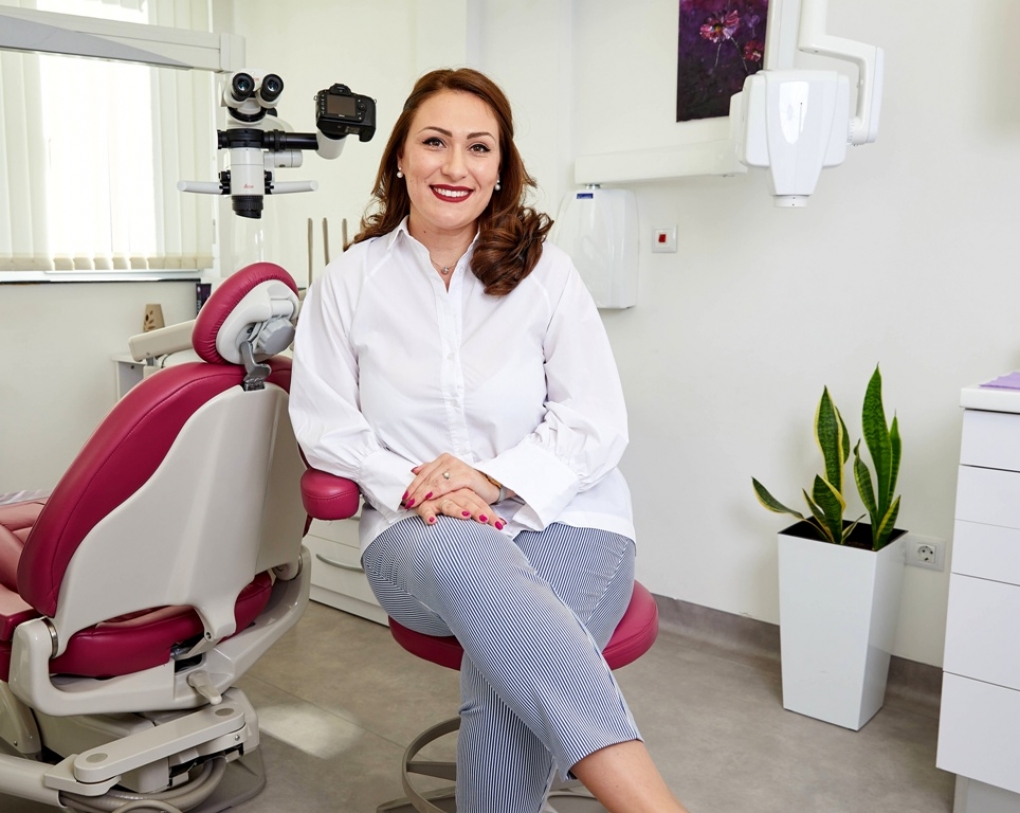
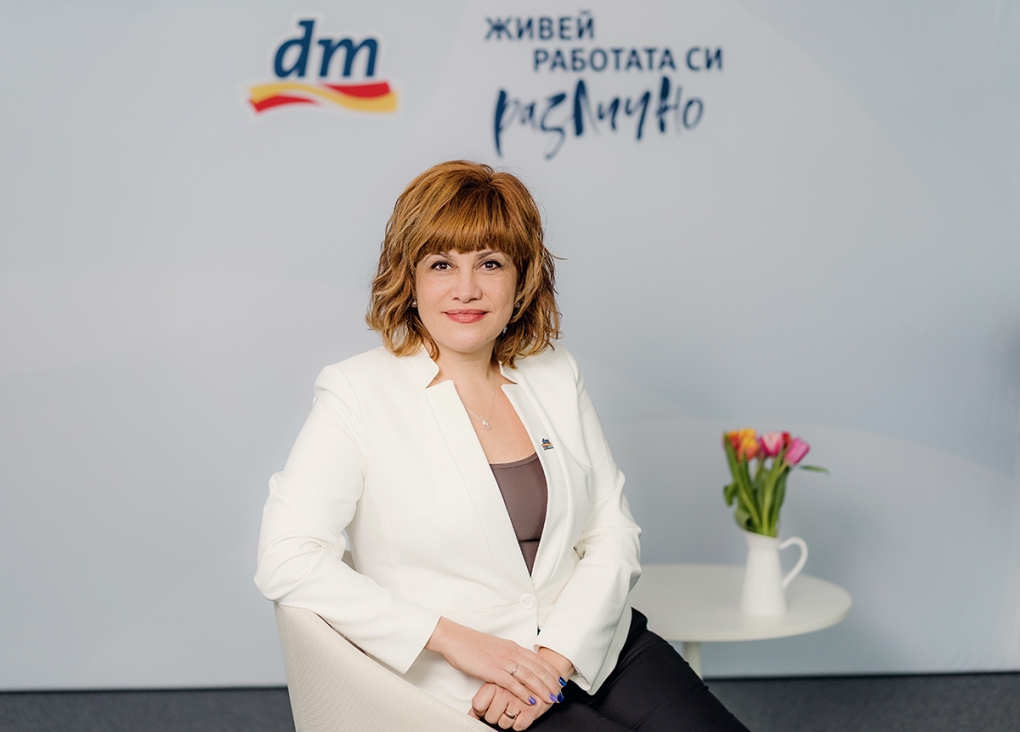
Dr. Mirena Doichinova is co-founder and director of "The Smile Center Family" dental clinic. She has a diploma from Medical University-Sofia, majoring in "Dental Medicine". She works in the field of endodontics /root treatment of a tooth/, and her passion for it was born during her student years since then she has not stopped improving her knowledge and skills in the field. At the end of 2012, endodontics under an operating microscope began to work. Dr. Doichinova likes the quiet music and the calm and cozy atmosphere in the clinic. She is demanding of the team and her work and likes to spend her free time with her family and three children - Alexander, Philip, and Karina. Dr. Doichinova is a die-hard fan of Lily Ivanova. Orchids are her passion and hobby.
Dr. Doichinova, what are the most common dental problems these days? And what are they due to - inadequate dental care /on the part of the patient and dentist/, poor quality food, harmful habits, other...
The most common disease worldwide is dental caries. Over 90% of the population has this problem. Their untimely treatment leads to complications of dental caries (pulpitis, periodontitis, cysts). I deal entirely with this part of dentistry - the root treatment of teeth (pulpits, granulomas, cysts).
Food nowadays is extremely rich in sugar and this is one of the reasons why dental problems have become even more prominent in society. Hygiene also has its place among the factors of the formation of caries and inflammation of the gums. All patients brush their teeth, but few clean them. We, as dental practitioners, must educate and motivate patients about proper personal oral hygiene. In our clinic, this is part of the first tartar cleaning visit. Patients are thoroughly explained and shown how to brush and floss. The results are impressive because it turns out that people never knew how to properly care for their teeth, gums, and tongue.
How do you and the Smile Center Family dental clinic team understand dental care?
Almost all specialties from the dental spectrum are represented in our clinic. We always take a comprehensive approach to the treatment of our patients. We start with the treatment of the gums, continue with the treatment of caries and their complications (pulpits, granulomas), then orthodontic treatment if the patient has such a problem, and finally the aesthetic completion of the case (crowns, veneers). If this sequence is not followed and only the aesthetic part of the treatment is done, the patient's happiness will be short-lived. Patients need to understand that a beautiful smile is a healthy one, not a white one. Treatment always takes priority over rushed aesthetics. All doctors in the clinic are closely profiled and each of us has a role in the complex treatment of patients.
The Bulgarian seems to resort to the services of the dental specialist mainly when necessary - pain, broken tooth, etc. In the clinic, you make a detailed treatment plan - what does this mean, and what are its advantages?
The Bulgarian goes to the dentist but likes to solve only the urgent problem that has arisen. The truth is that patients need total rehabilitation and the treatment of a broken tooth is simply a distraction from solving the general problem. Did you know that in most cases a broken tooth means a problem with the bite? Some patients report that a given tooth breaks for the third time. This is a sure sign that the problem is not in the food the patient eats, but in the fact that he needs a serious diagnosis and treatment of his entire dentition. In our clinic, Dr. Trajan Dobrev is one of the three doctors in Bulgaria who owns a device for diagnosing problems in the joints of the lower jaw and the bite - a condylograph. Dr. Dobrev received his education at one of the most prestigious centers for postgraduate studies in the world - VieSID, Vienna. He is a graduate of the school of Prof. Slavicek, who developed an ingenious concept for the complex treatment of patients with long-term success. All our patients undergo such diagnostics and the treatment plans are fully aligned with it.
At the "Smile Center Family," you offer microscopic dentistry. What is its place in professional dental practice?
When we were students, an older colleague of ours told us, "I'm giving up all my dental work before the microscope!" This statement made a big impression on us, and the clinic microscopes were the first thing we bought. We work with microscopes from the global giant and market leader Leica. All manipulations are performed under magnification - most often we use 16 times magnification of our vision. Dentistry under a microscope has nothing in common with dentistry without it. If with the naked eye, we decided to treat a tooth with decay and we saw off the carious tissue, if we looked at 16x magnification, we would see that there is a LOT more carious material that we would seal with the filling if we didn't know it was there. Secondary caries come without us even suspecting it. We manage to exercise complete control over the treatment by working under a microscope.
I also deal with the removal of broken instruments in the canals of the teeth. Until 20 years ago, such teeth were extracted. Now, thanks to the microscope, I can remove the broken instruments and heal the tooth. The success rate of root canal treatments is very high (over 90%). This allows us to be conservative in the treatment plan and to save many teeth, respectively – patient worries.
You work in the field of endodontics or root canal treatment. Share more about your practice - what it is, is this type of treatment often required, what complications can occur, etc...
Endodontics is the science of treating the root canals of teeth. The most common diagnoses are pulpitis, periodontitis (granuloma), and radicular cyst. All these teeth are treated with local anesthetic and are now painless. A granuloma is an inflammation of the bone around the tip of the tooth root. Very often they are asymptomatic, but this does not mean that there is no problem. Chronic granulomas stay in our jawbones and can lead to complications - pain and swelling are the most common. There is something very important that patients should know about teeth with granulomas. In some people, the problem appears in distant areas of the tooth, e.g. Alopecia areata. This is a circular loss of hair on the head and, in men, on the beard. If a tooth is a cause, when it heals properly, hair grows back in the hairless areas.
How would you rate the quality of the dental treatment offered in our country? What is the added value that you and your team can offer at "Smile Center Family"?
I feel that the dental service could be at a much higher level. This is only possible if more doctors are given a chance to specialize and profile themselves narrowly. General dentists who do everything from cleaning tartar to cavities, root canals, wisdom teeth extractions, placing implants, veneers, and crowns to placing fillers - to me, is incompatible with quality. Each of these disciplines requires dedication and a lot of time and occasion to become good at. It cannot be meticulously crafted if we are "specialists in everything". In our practice, each doctor has a narrow specialty in which he works. We also have satellite colleagues outside the clinic with whom we solve problems that we cannot, for example, orthodontics, some parts of the surgery, and pediatric dentistry. We believe that in this way we are as fair as possible to patients and we are calm that we have given them the maximum that modern science offers.
What are the trends in the field of dentistry? To what extent is it developed in our country, what are the innovations, and what is still to come?
There are world-class clinics in Bulgaria. There are wonderful doctors, but unfortunately, they are not so popular with people. They are secluded in their offices and simply help their patients without unnecessary fuss. In my opinion, greater publicity and popularity should be given to this type of dentistry. It is part of the education and health culture of the patients. Thus, patients will know that they have more options to treat and save their teeth.
The trends are towards digitization of dentistry. Both diagnostics and treatments are increasingly made with the help of digital services: computed tomography - to diagnose problems that a simple X-ray cannot; CAD/CAM systems - for making crowns, veneers, and others, for which we needed dental technicians; the condylographic apparatus - for the diagnosis of joint problems, which I have already mentioned; Digital Smile Design - thanks to which we make a project of the smile. All these methods help us to be very precise in our work and have turned the world of dentistry upside down. We can only be happy to be contemporaries of these innovations. So there are almost no unsolvable problems.
At what age should dental care begin to prevent serious dental problems in the future?
Caring for children's teeth begins with the growth of the first tooth. There are special fluoride-free pastes and soft thimbles for parents to use to clean their children’s teeth in the morning and at night. At the age of 1 should be the first visit to the dentist. To check hygiene, to give directions if necessary, and above all to examine the child for harmful habits - breathing through the mouth, sucking on a finger, lip, or other objects (pacifier or blanket). After that, preventive examinations should be done 2 or 3 times a year so that the child can accept the dentist as a friend and trust him. In addition, small problems are solved quickly without stressing the children. Everything else is in the hands of the parents - care, discipline, and conversations.
Your wish for the readers of Business Lady magazine?
I wish them to be healthy, and to smile widely, and if something bothers them about their smile, modern dentistry is capable of anything. Be responsible for the health of your teeth and gums and they will serve you faithfully. It was a pleasure to talk about what we do and make modern dentistry more popular. People need to be informed so they know what their treatment options are.